Not all of Buffalo’s Olmsted park system preserves its beauty. Attention naturally centers on the six main parks of the system and their connecting parkways. Almost overlooked are Olmsted’s designs for smaller parks and grounds, one of which is Bennett Place, now called Bennett Park in deference to early popular usage.
In 1886 the control and care of all public squares and greens in the city was transferred to the Board of Park Commissioners. The following year, in 1887, the Olmsted firm was engaged to prepare landscape designs for four of the most significant grounds over which the Board had assumed control: the pair of Terrace parks, Day’s Park, Masten Place and Bennett Park.
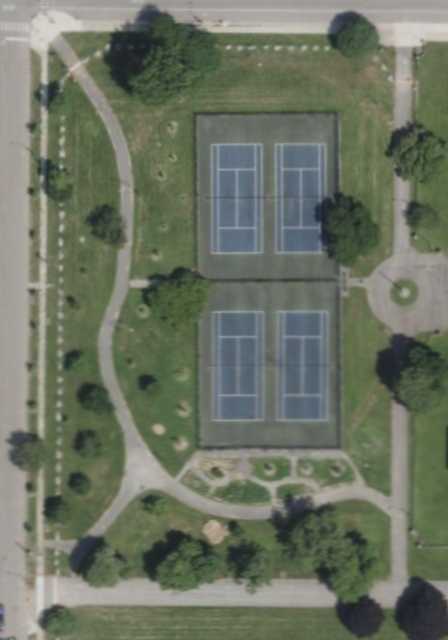
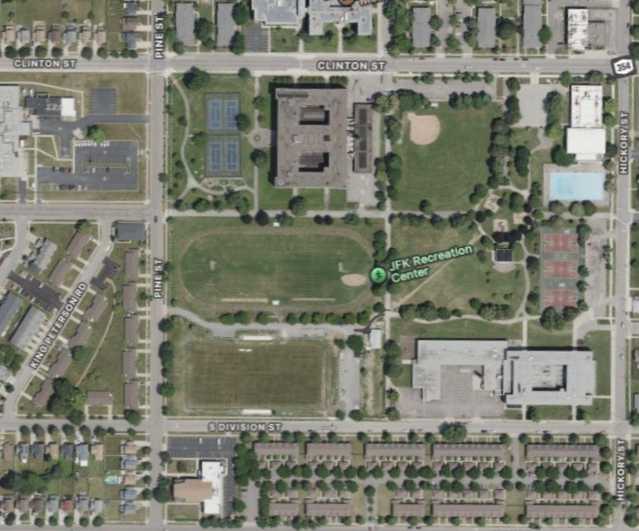
Over time, the situation of these grounds shifted. Day’s Park, largely through the efforts of its neighboring property owners, has been nurtured and it maintains most of its original appearance. Masten Park, on the west side of Masten Street between Best and North Streets, was taken not long after its construction to become the site of Fosdick-Masten High School, now City Honors High School, and lost. The Terrace Parks, the Upper Terrace and the Lower Terrace, now lie beneath the ramps of the Skyway. Bennett Park, on the east side of Pine Street between Clinton and Eagle Streets, is still parkland but its Olmsted design is gone. A pair of tennis courts and a few isolated park benches are all that hint that it is not simply a vacant lot adjoining a vital community with dozens of newer homes and apartment buildings.
The grounds of Bennett Park had once been the home of Philander Bennett, a very wealthy attorney, judge and real estate owner. After both he and his wife had died, the latter in 1885, the house and its immediate grounds – about 2-1/2 acres – were offered to the city to purchase for use as a park or as the site of a public market by her son Edward (who has also a park commissioner) and other heirs. The advocates for park use prevailed, and the site was purchased for park use. It was named Bennett Park, recognizing Judge Philander Bennett, the former owner. The city caused the house to be removed, and fenced the grounds in anticipation of further development for park purposes.
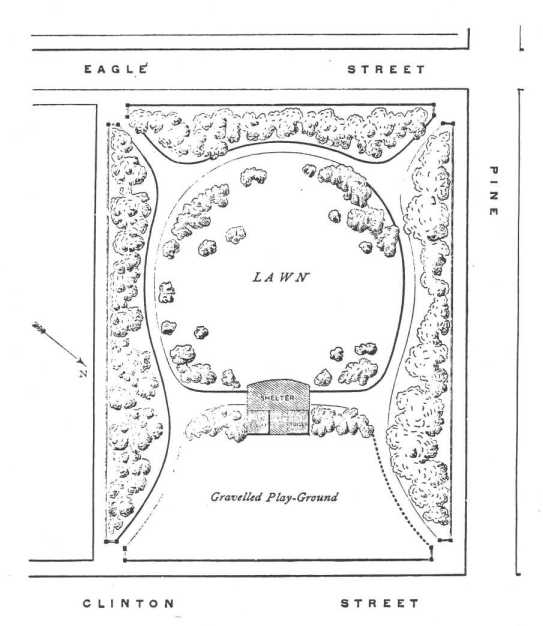
Olmsted’s 1887 design for the park called for entrances into the grounds from each corner of the property, with flagstone walks encircling a lawn of horseshoe shape at its center, a shelter house oriented to face toward Eagle Street, and a graveled play ground adjacent to Clinton Street. Thick plantings were sited to screen the park from the streets, and help conceal from the visitor that the site was actually relatively small.
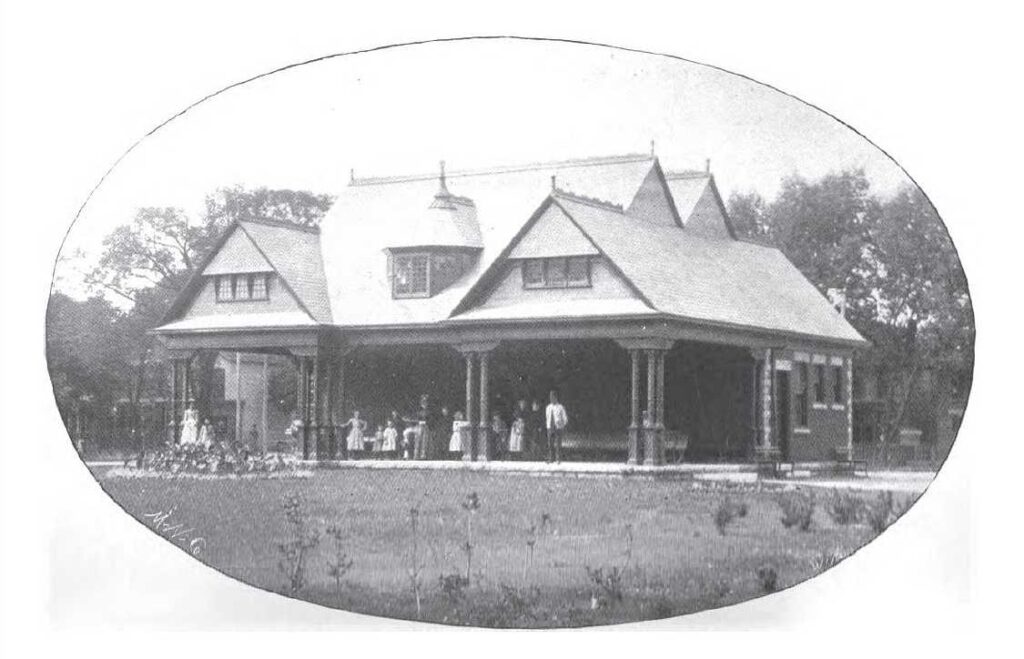
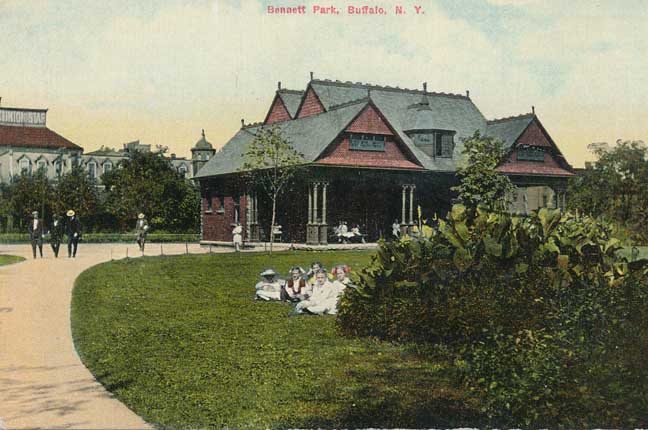
The shelter house was constructed in 1888, and was designed by Henry L. Campbell of Buffalo, who was the architect for a number Buffalo park structures of the period. It was a brick gabled structure, trimmed in stone, with flagstone floors. It housed restroom facilities and a tool room, with a large covered space open on three sides to protect park visitors from the elements during inclement weather. A large storage area, the full size of the building, was provided under the gables. Bennett Park quickly became a very popular attraction, as it was located in a densely populated area of the city, and was quite distant from any other city park.
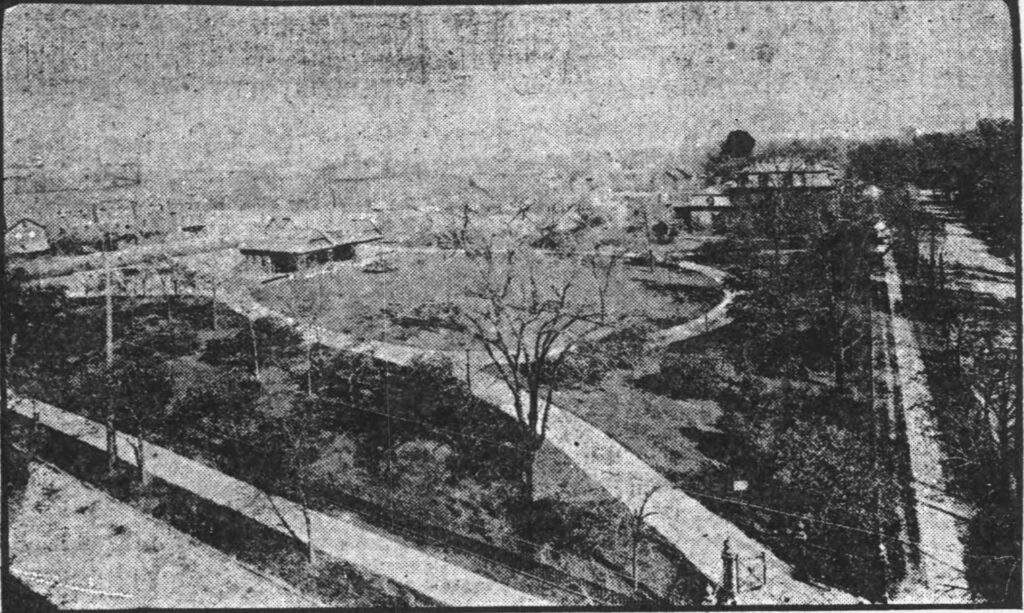
Beginning in 1916 the functions of the old Board of Park Commissioners were assumed by the city. That same Spring, two regulation clay tennis courts with 12 foot backstops were built in Bennett Park. The graveled playground was removed to accommodate them. Later, in 1927, a new combination bath house and shelter built by city crews to replace the original park shelter. The plantings were considerably reduced, with lawn and floral display sharing the site with the new active recreation facilities. Its use as a quiet community gathering spot diminished. In 1961, it effectively became incorporated into the larger and newly constructed John F. Kennedy Recreation Center to its north and west.
Neglect and vandalism resulted in the demolition of the newer park shelter, and it was not replaced. The tennis courts within its boundaries were poorly maintained, blacktopped, and again poorly maintained. More recently, though, renovations have removed the old softball field and four well maintained tennis courts are now on the site. Bennett Park, however, has essentially been lost.
There still might be hope that Bennett Park could become again the gem Olmsted intended. No expensive structures would have to be removed, no highways relocated. The original park plans are in the Olmsted archives. The adjacent recreation complex does have space to house the tennis courts if they were relocated. The large number of newer homes built in the immediate area add a new dimension to the community Bennett Park serves. Within easy walking distance of the central downtown area, the original plan of Bennett Park envisioned it as a quiet beauty spot with plentiful benches and shady trees. An outpouring of public sentiment and pressure, which saved Cathedral Park, a smaller central city park created in 1971, from destruction several years ago, could bring Bennett Park back from the brink of extinction and add something remarkable to our Buffalo green space? It would be a unique opportunity to actually rebuild a lost Olmsted park in its entirety, right in the place where it originally was created.
260421